Horses, history, and the making of a sport
More than 5000 years ago somewhere on the Steppes of Asia a Neolithic daredevil jumped onto the back of a horse, and in doing so changed the course of human history. Before this time, horses were only known as a source of food; they were soon to become the cause of the most dramatic change in human society by opening up enormous possibilities for travel and warfare. The early empires — the Assyrians, Scythians, Greeks, Xiongnu, Huns, Mongols, and others — were all forged on horseback; horses allowed these people to travel west to Europe and easterly across the vast plains to China.
Horses were an essential military asset from those days up to the start of the 20th century, by which time the numbers in use were huge. In WW1 millions were used, and killed, by both sides. The German army even had a million horses still in service as late as 1944. Civilian horse use also reached its zenith at this time: for example, in the 1890's there were 300,000 horses transporting people and goods around London — and leaving 5000 tons of manure on the streets each day!
The rapid decline in horse numbers needed for both military and civilian uses into the 20th century opened the door for a rapid increase in numbers available for sport. Sport on horseback was certainly not new; racing, for example, probably started from the onset of riding and was definitely known in ancient Greece — it was a popular part of the 680 BCE Olympics.
Given the importance of horses, when the modern Olympics were created in 1894 it wasn't surprising that equestrian activities were cited as one of the seven sports to be included. But these were expected to be tests of riders, "with no account to be taken of the quality of the horse". Great concept, but impossible to create. The different equestrian disciplines soon went their own ways; polo and jumping were included in the 1900 Games, and dressage in 1912.
How dressage tests grew up
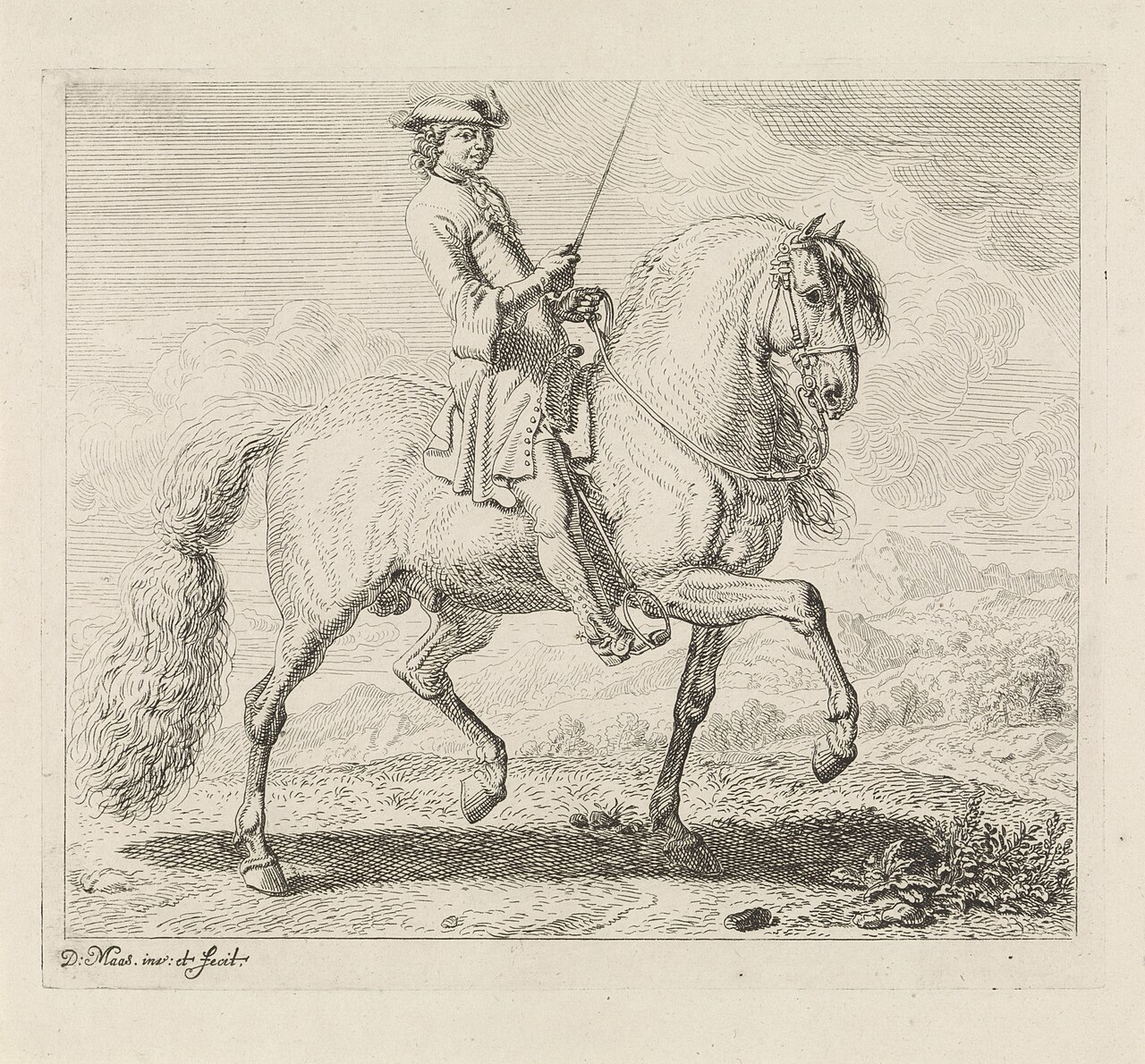
Dressage competitions began in the 19th century as a test of the training of their horses amongst Continental army officers. Judging by the 1912 Olympic test — no lateral work, pirouettes, piaffe, or passage — those early tests were very basic: just the work a "normal" army horse would be expected to perform. But this basic work was in sharp contrast to the elaborate high school, "advanced" work which had been practiced by wealthy aristocrats for 300 years. These two strands merged to some extent as the tests became more complex; piaffe and passage were introduced into the Olympic test in 1932.
We have little information about the type of training of 300 years ago — but some literature suggests that savage treatment was quite normal.* This, at a time when life for humans (and presumably horses) was, according to Thomas Hobbes, "poor, nasty, brutish and short", would not have raised much ire. But now, it does, with ever-increasing intensity.
Three modern questions
Phone cameras and the internet have raised awareness of the realities of some training, and people have become much more vocal in asserting their opinions about what is acceptable. As a result, people are beginning to ask three questions: is it fair to train horses to advanced levels? Is it fair to compete? Is it fair to ride at all?
Training at low level is essential for the safety and comfort of horse and rider. Training to advanced levels is justifiable providing it's done with the spirit of creating a harmonious athletic picture. People do, I believe, enjoy watching and feeling the systematic development of the horses' body and mind. But competing is a different story.
Competition: the best and worst of us
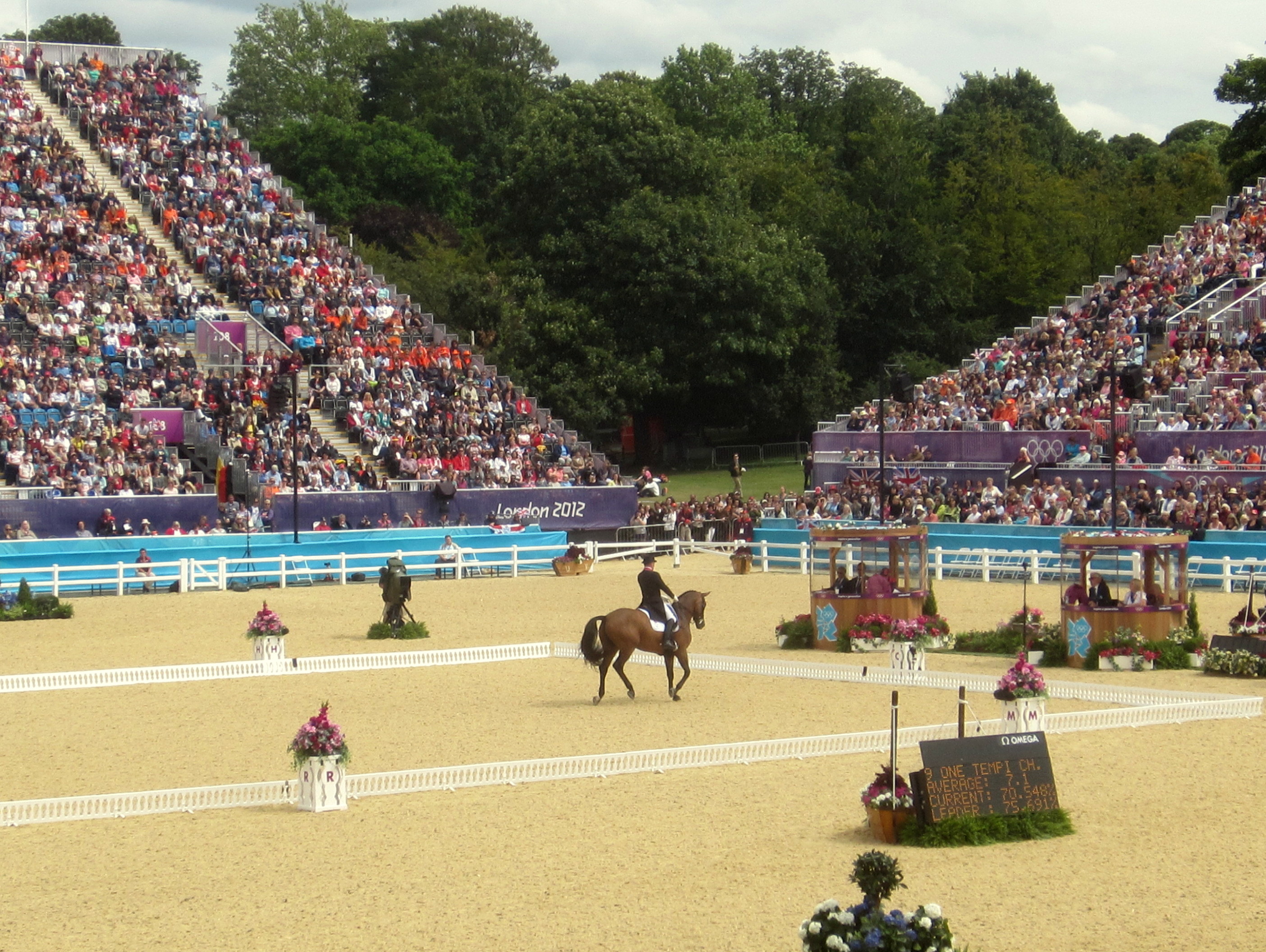
Competitions bring out the best, and the worst, of human nature. On the plus side, they stimulate progress; without exception, every rider to whom I would attach the label "brilliant" is, or has been, an advanced competitor. Competitions deliver purpose, energy and enthusiasm. But the negative side is that they can cultivate the belief that results on the scoreboard are all that matters, the journey isn't important, and the ends justify the means; there are some for whom the horse is merely a tool to satisfy their ego. Like the early Baroque aristocrats.
Competitions bring out the best, and the worst, of human nature.
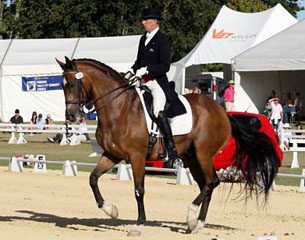
We all know that the competition world has given scope for the abusive, the unethical, to train harshly, and these have brought the reputation of dressage to an all-time low. A few years ago I was horrified to hear a small girl, pointing to a well-known rider in a warm-up arena at a major show, ask her mother: "Why does she hate her horse so much?" That rider went on to win the class. What message does that send to the public and to fellow competitors? Stewards are empowered to intervene, and do so in cases of overt cruelty, but the boundaries between justifiable corrections and unjustifiably nasty riding are blurred.
What the report showed — and didn't
A report was published a year ago showing many photos of a few top unnamed (but recognizable) dressage horses at recent shows. The images are horrendous: they show pained faces, massive force being applied through double bridles, tongue discoloration, constricted and shortened necks; even if they have been cherry-picked to suit a particular agenda, they shouldn't exist. The comments in this report from expert equestrian scientists state in eloquent and academic terms what we all know already — that riding like this is simple cruelty. But the report has two major weaknesses. Firstly, it gives no indication of how representative these photos are of the whole test; given that up to 8000 images were taken during each test (using a fast-frame camera), this should have been easy to evaluate. If the displayed images are only bad moments of correction, we might just apologize profusely and put it down to our imperfection. If they are the norm, and these horses are winning, we really do have problems. Secondly, the horses shown are also capable of producing some beautiful work, yet no attempt was made to somehow counterbalance the grim photos shown.
The experts gave few proposals for improving dressage, but one did make an interesting clarification: the FEI rules and guidelines seem to be incompatible with ethical riding. Professor Paul McGreevy of Sydney University stated that "sustained and severe compression of oral and facial tissues appears to contravene the regulations." These regulations state that neither curb chain nor noseband should be so tight as to harm the horse, and bits must not place any mechanical restraints on the tongue and should not hurt the horse. Restrictive nosebands, he wrote, are designed to hide evidence of discomfort — open mouths and the like — and in doing so breach "clean sport" principles; looser nosebands, more in keeping with the rules, would allow for more evidence of discomfort, which would be penalized by judges. A dilemma for the sport, and for competitors.
Tensions, technology, and the limits of measurement
McGreevy recognizes that judges play a key role in changing the sport but have a hugely difficult task. He wonders if technology can help. But what technology? In another recent report some UK researchers investigated rein tensions and bridle pressures in a few advanced dressage horses as they were being ridden, some in snaffles, some in double bridles. I'm not sure how much credence can be given to the results, since the number of horses used was small (11), we don't know the quality of the combinations, and the conditions of the experiment were not those of a normal competition. The rein tensions the British team measured were considerably higher (three times in walk, four times in trot, five times in canter) than those offered by a large number of riders in an off-the-horse testing done several years ago: are we not able or willing to offer a moving horse the sort of contact we would consider the optimum? Measuring rein tensions in competition horses is technically feasible, and the results would be fascinating, but would they be of use? Would technological developments — whatever they may be — help judges (and riders), or would they distract from developing a holistic "feel"?
The British study showed one surprising result: snaffle and double bridles were ridden with almost exactly the same rein tensions. And yet we're taught that the double should demonstrate more lightness and refinement — that's one of the reasons given for preserving its use. This is relevant in the growing debate over whether snaffles should be allowed in advanced competitions.
The argument over bridles
The argument over bridles is fairly simple. Double bridles have been handed down to us from earlier generations whose work we're encouraged to revere because of some delusion that they were times of beautiful "classical" riding, some sort of Camelot era, which we have bastardised with our nasty competitions. If they had not been invented, and someone appeared today with the idea that "we should put two bits — one a lever — in the mouth", they would be in court for animal cruelty. Yet we tolerate this.
We know that bad riding in a double bridle takes cruelty to another level. We know that if the horse is beautifully trained it may tolerate most bits, including the double, but some sensitive souls simply hate the presence of two: why should they not be allowed to work in their preferred bridle? Without doubt some horses would be more comfortable in their advanced work if snaffles were allowed, but would horses in general be happier if double bridles were banned? I'm not convinced that in our current world they would; riders being harsh in doubles might become even harsher in snaffles. But as we get an improved handle on the ethics of riding, this may be the way it will go.
And what about no bit at all?
The use of bits is prime fodder for ethicists. Do we need bits at all? Would horses be happier, more comfortable, if we rode without bits? I'm out of my depth here — I've little experience of bitless riding. I have, however, ridden a Grand Prix test bitless, and enjoyed it, and have seen others do the same, but all these horses had been trained conventionally, with bits. Have horses been trained to advanced level from the beginning of their lives without bits? I don't know; I've not heard of one. Are bitless bridles as benign and gentle as proponents claim? We are very aware of the damage done through the misuse of bits: can bitless bridles also damage horses? If bitless bridles become more mainstream, would we need to change our training and judging philosophies? Bitless riding has been known for millennia — the troops of Genghis Khan rode bitless except in battle — a revealing switch? — and bitless competitions are available in some countries now. Do we see them as a replacement for "normal" dressage, or an addition?
The judge's task
There's no current consensus for combatting nasty riding — via the judging is perhaps the most common view, but this isn't as easy as some would think. For as long as I can remember, judges have been at the receiving end of criticism for not policing unethical or "incorrect" training. Time and time again we read about how dreadful it is that horses with major faults are being marked too highly. We hear that the rules are there, but need to be enforced. The requirements of a well-trained horse are clear for all to see, and agreed on, but some claim they're not being upheld by judges. But this criticism is rather unfair and outdated. With increasing numbers and quality of both horses and training, the job of the judge must be becoming increasingly difficult, yet these days at major shows we rarely see adjudication we strongly disagree with — unlike in the past.
A measured optimism
My view is that competition is not the evil it's sometimes made out to be; training to advanced, and competing at that level, can be done with care and respect, and can be comfortable for the horse; evidence from the 2025 European Championships suggests that this concept is becoming widespread. Yes, the sport needs to find a way to reward training skills more and innate horse talent less; yes, the sport needs to find ways of curbing those who have more ambition and ego than ability. It is embarking on measures it believes will help — for example, regulating tightness of nosebands; these may be sensible, but they will not hinder those who just don't seem to want to ride with respect and empathy. We don't know how to handle them.
Should we ride at all?
The question of whether we should ride at all is one I'll happily kick down the road for another generation. If we didn't ride, there would be no horses. Most both within and outside the horse world would, I feel, find that this destruction of the 5000-year-old Centaurian Pact utterly tragic.
If we didn't ride, there would be no horses.
* Some training methods described in early books are horrific — one of my most horrific reads is a recommended way to "encourage" a reluctant horse to go forwards: have a servant tie a cat upside-down at the end of a long pole, which can then be thrust up between the hind legs of the evasive horse. Poor horse, poor cat, poor servant trying to tie it there.